WATCH-EXPLODE-01 / PRESERVED FIRST ATTEMPTS
We asked AI to build an exploded watch.
Which ones actually work?
One illustrated watch. Scroll it apart, then put it back together. Compare preserved first attempts, one bounded repair and the failures each exposed.
Inspect the attemptsNo first attempt has verified full acceptance. Actual captures show both the craft and the failures.
Read the ten-part component key
01 Crystal · 02 Bezel · 03 Seconds hand · 04 Minute hand · 05 Hour hand · 06 Dial · 07 Case middle with crown and lugs · 08 Movement assembly · 09 Rear oscillating rotor · 10 Caseback.
The hands share the dial center; the case surrounds the dial and movement. The rotor sits behind the movement. This schematic explains the task, not a disassembly procedure.
Ten recognizable parts.
Three hands at 10:10:30.
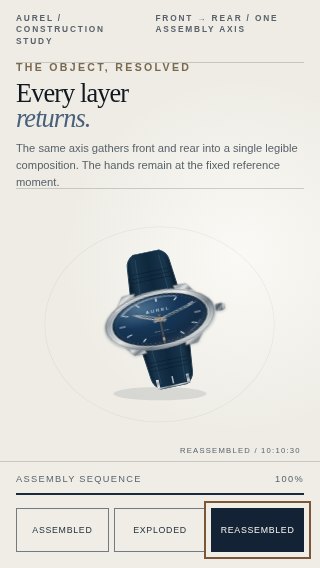
Assembled → exploded → reassembled.
Scroll forward, then back.
One standalone HTML file.
Accessible down to 320px.
WHAT HAPPENED
No first attempt passes the whole record yet.
Both fresh attempts render detailed watches and working state changes. Opus keeps the normal-motion stack and controls in frame; Astra clips them on desktop and landscape. Neither passes the whole brief. Compare the actual first responses below.
Opus still clips its reduced-motion landscape view; both have contrast failures. Same prompt and requested high effort do not mean equal compute. Kimi’s separate before/after remains available by selecting Kimi v2 in both menus.
Actual unchanged-source captures are available at matched sampled positions. No aesthetic score is assigned.
Two first shots, two different gaps
Astra and Opus received the exact same frozen brief in fresh subscription contexts: a fictional watch at 10:10:30, ten illustrated components, and a reversible assembled → exploded → reassembled scroll. Both returned complete standalone HTML. Neither passes the full brief. These are conceptual illustrations, not verified mechanical simulations.
| Observed first response | Astra | Opus 5.5 |
|---|---|---|
| Scroll, reverse, keyboard reassembly | Worked in sampled checks | Worked in sampled checks |
| Desktop / normal landscape | Lower parts and controls clipped | Stack and controls fit |
| 320px phone | Seconds-hand label clips | All ten numbered callouts fit; names are in the guide |
| Reduced motion | Static selection works; desktop view clips | Static selection works; landscape view clips |
| Text contrast | Guide keys below 4.5:1 | Visible inactive captions below 4.5:1 |
| Original outcome | Complete · not accepted | Complete · not accepted |
This is a matched-input comparison, not equal compute. Both requested high effort and 16k total tokens including reasoning. Astra’s actual usage and cap enforcement are unknown; Opus reported 41,826 output tokens including 27,938 thinking, exceeding that request. “High” labels do not establish equal work. Astra’s reported task-turn duration was 547.342 seconds; Opus’s operator elapsed time was 433.515 seconds. Neither measures total review or production time.
Opus: a better-fitting explanation, with failures still visible
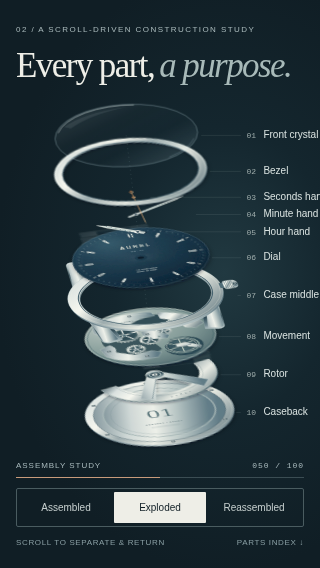
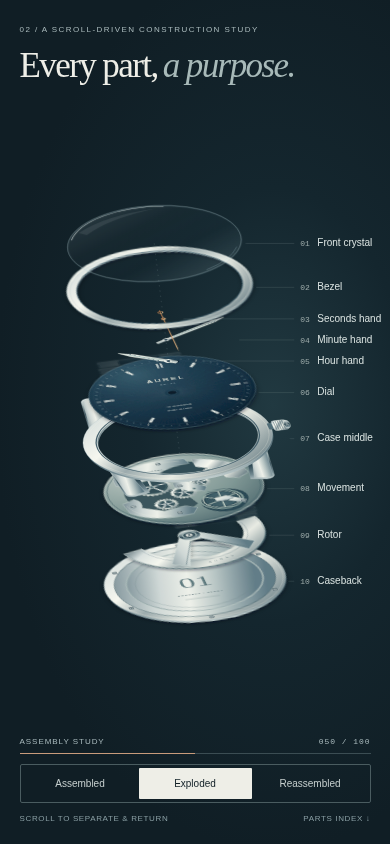
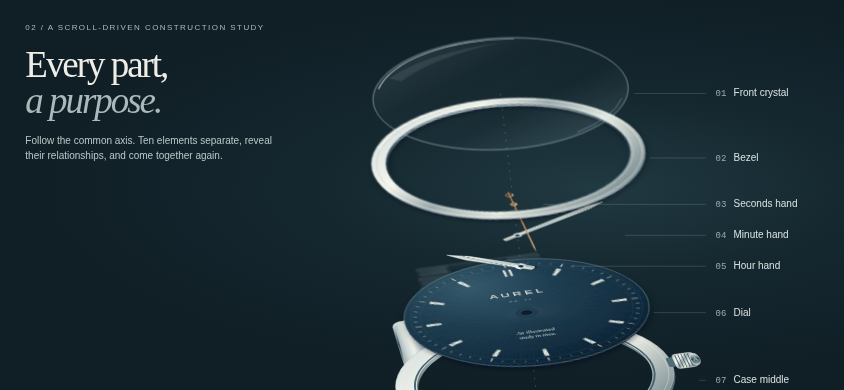
Opus gives the exploded stack room to breathe: a translucent crystal, open silver rings, blue dial, movement and partial rotor share a coherent axis. Its desktop labels connect to each layer; phone and landscape switch to numbered callouts. In the tested normal-motion frames, the stack and controls fit together. That is a useful result for this task, not a universal model win.
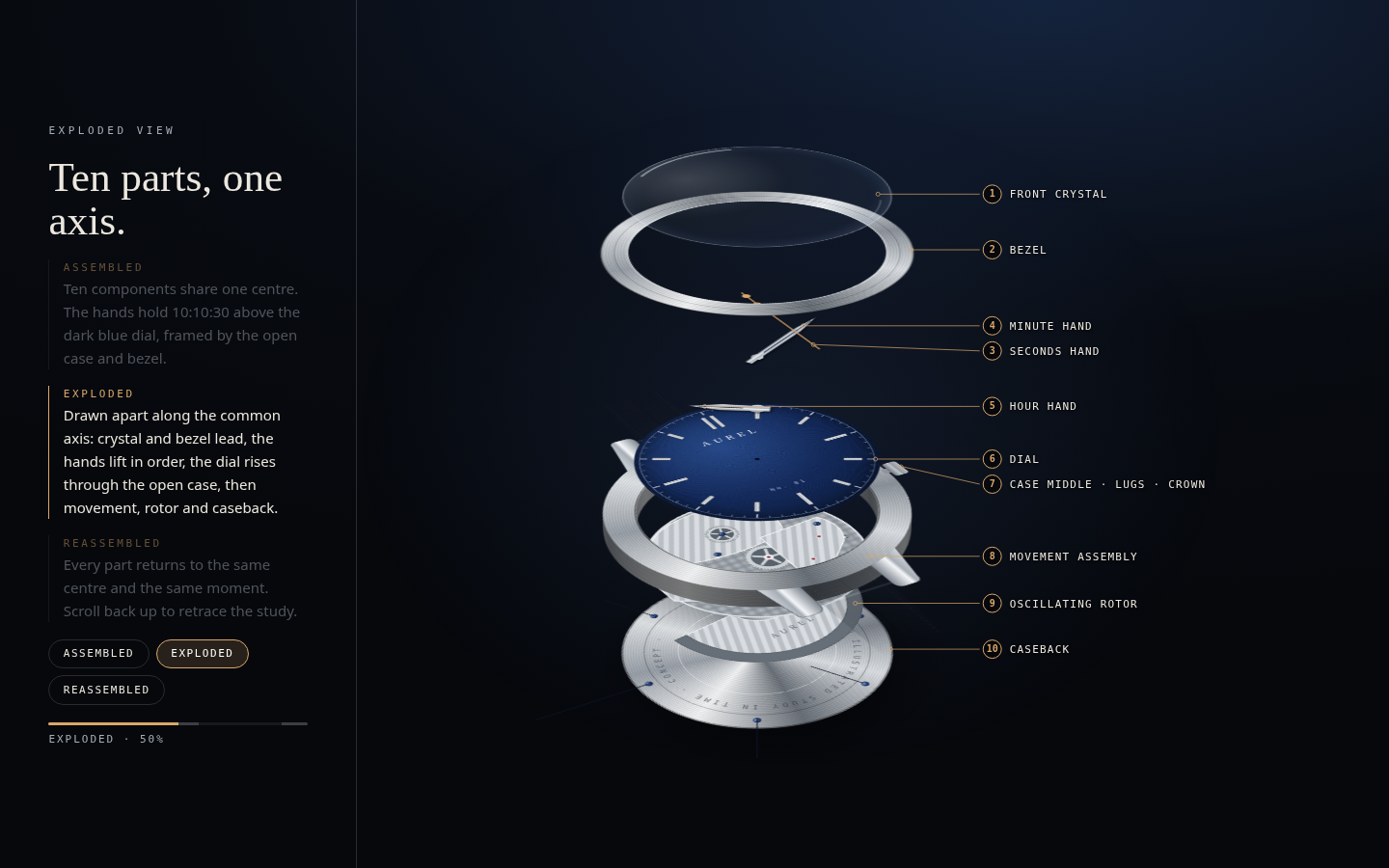
Original first response, no repair. 320px phone · normal landscape · opening artwork.
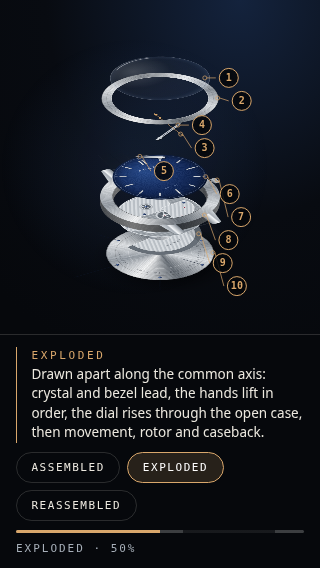
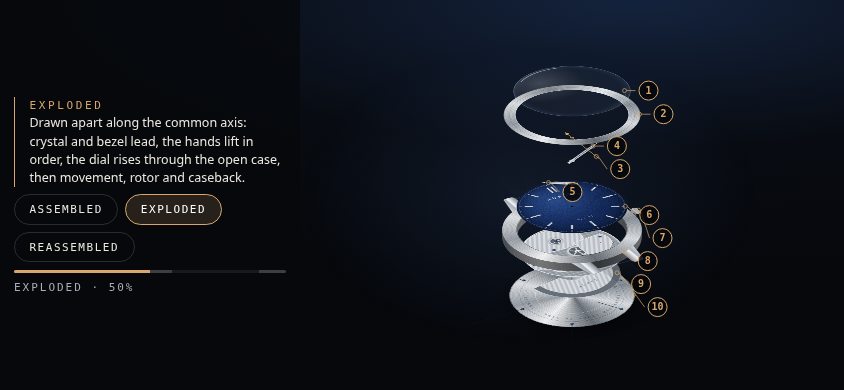
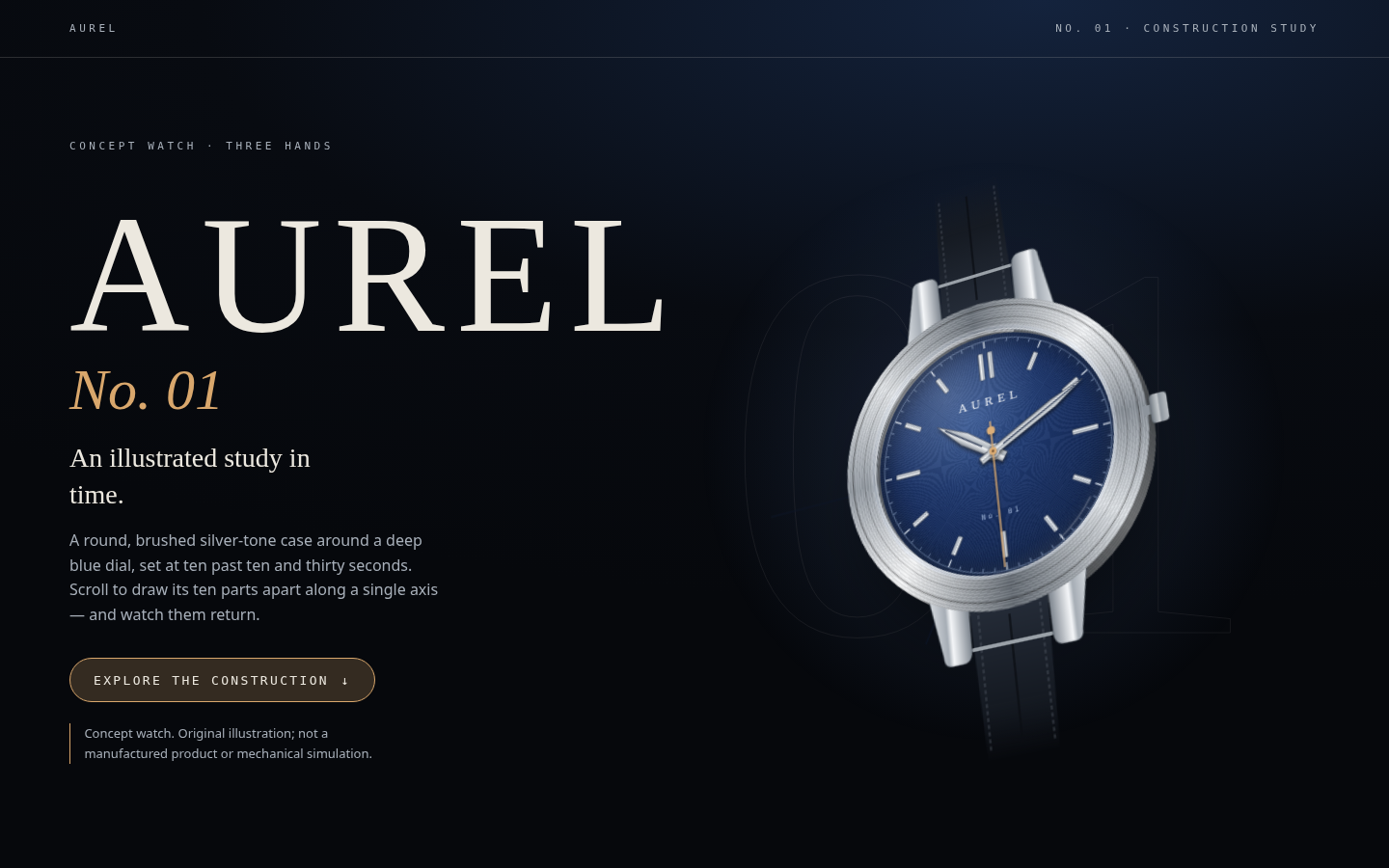
Reduced-motion landscape exposes the limit: its scene has a 520px minimum height in a 390px viewport, clipping the lower stack and caseback label. The dim desktop captions also miss the required contrast. Nonfatal malformed SVG coordinates affect caseback screw details; they are recorded rather than silently fixed. No repair was attempted. Independent assessment · browser observations · exact original source.
The one-response Claude Code run used the existing subscription, no tools, retry or API fallback. The CLI’s $0.8648418 list-price estimate is not a settled charge. The user confirmed no extra usage; subscription coverage does not mean free compute. Frozen route and token record.
Astra’s first shot: impressive detail, incomplete usability
A fresh, no-history Astra subscription attempt returned one complete HTML document; its reported task-turn duration was 547.342 seconds. The dial has radial detailing, the bracelet has articulated links, and the exploded movement contains toothed wheels rather than generic disks. The hand geometry matches the requested 10:10:30. Independent review recognized the craft; it did not grant full acceptance.
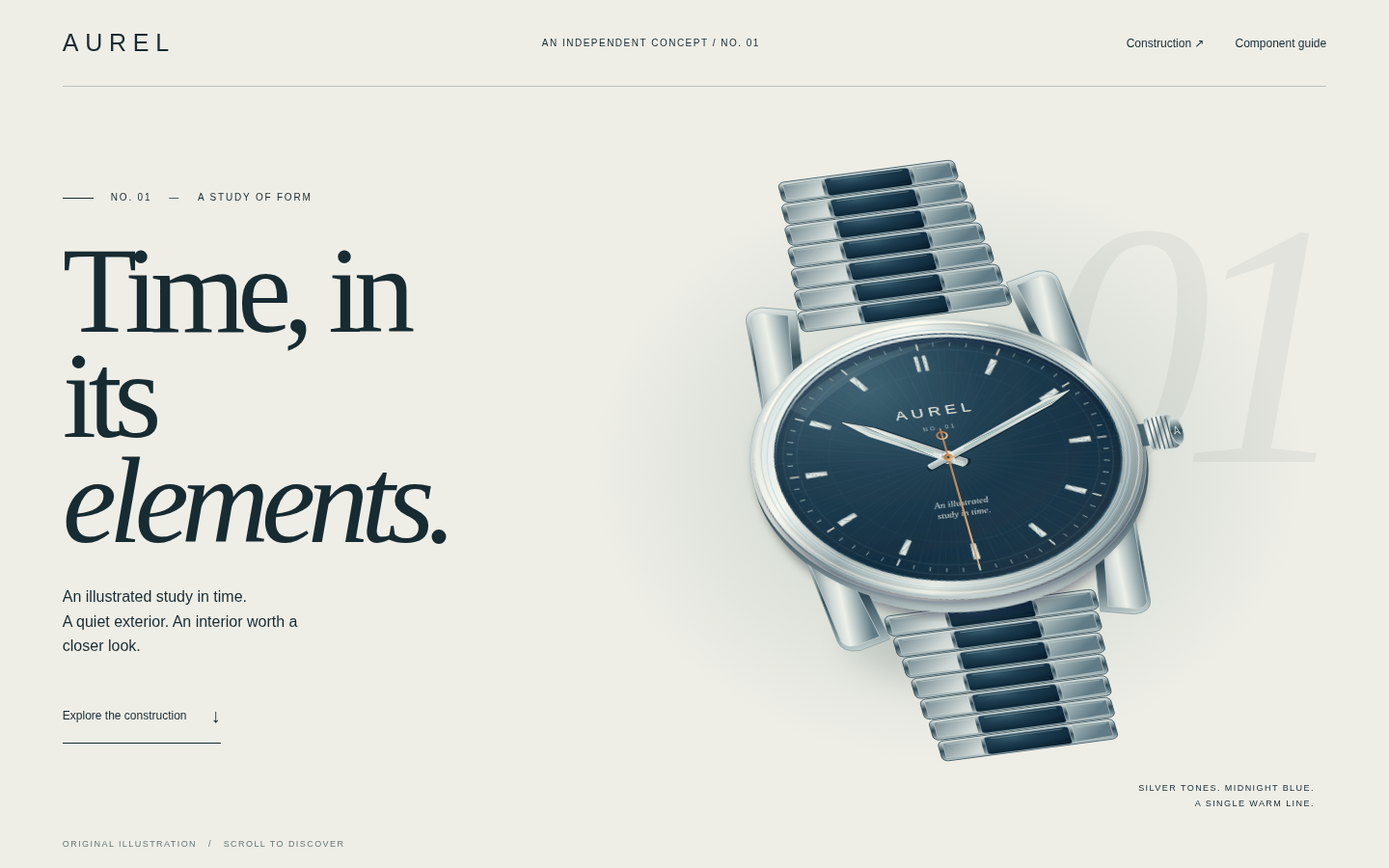
Unchanged first response. This image is model output, not the editorial challenge diagram above.
Scroll, reverse-scroll, reassembly, Explore navigation, keyboard activation and the three state holds worked in the sampled browser checks. The failure is what the reader can see: at 1440×900, the controls begin at y=1032.6, below the viewport. The exploded caseback disappears below the frame. Landscape is worse, and the seconds-hand label extends past the edge at 320px.
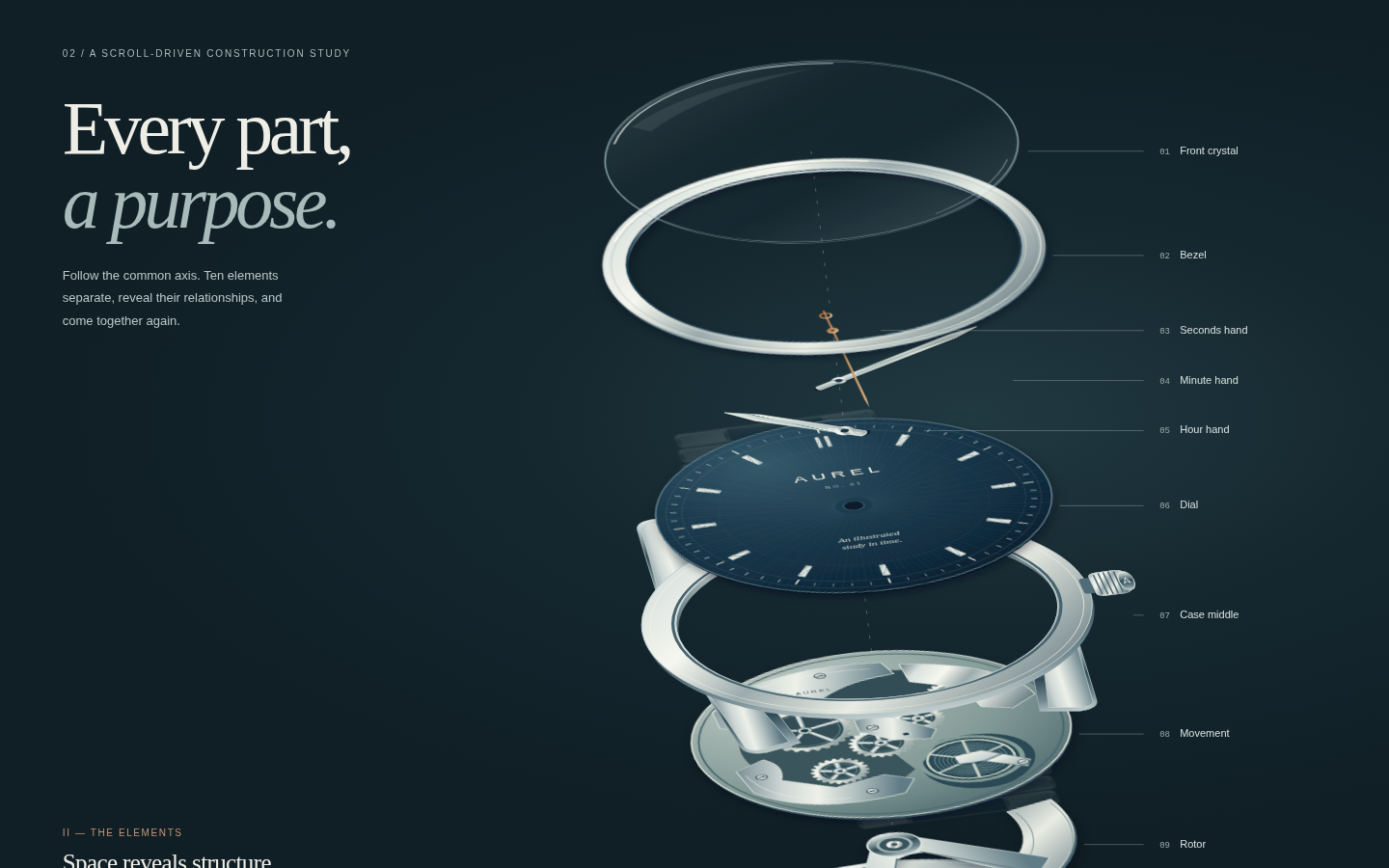
The clipped frame is preserved as evidence. Inspect the 320px phone, 390px phone and landscape failure.
Reduced-motion selection stays static through scrolling, resizing and a live preference change, but its desktop view still clips essential content. Guide-key text measures 3.41:1 contrast, below the brief’s 4.5:1 requirement. The result is complete, rendered, and not accepted. No repair was attempted. Read the independent assessment, browser observations or original source.
What the Kimi repair actually changed
Select Kimi v2 in both comparison menus to see its preserved first attempt beside its one model repair. The original completed but hid landscape controls and made the narrow-phone key too small. The repair brought the controls inside the viewport and made all ten key entries visible. Those are observed improvements, not a frontier-model win. The pair cost $0.449662; its original acceptance limits remain unchanged.
A separate Kimi v2 with Astra assistance derivative then kept that watch’s artwork and hand geometry while correcting contrast, overlapping copy, reduced-motion state handling and control/focus clipping.
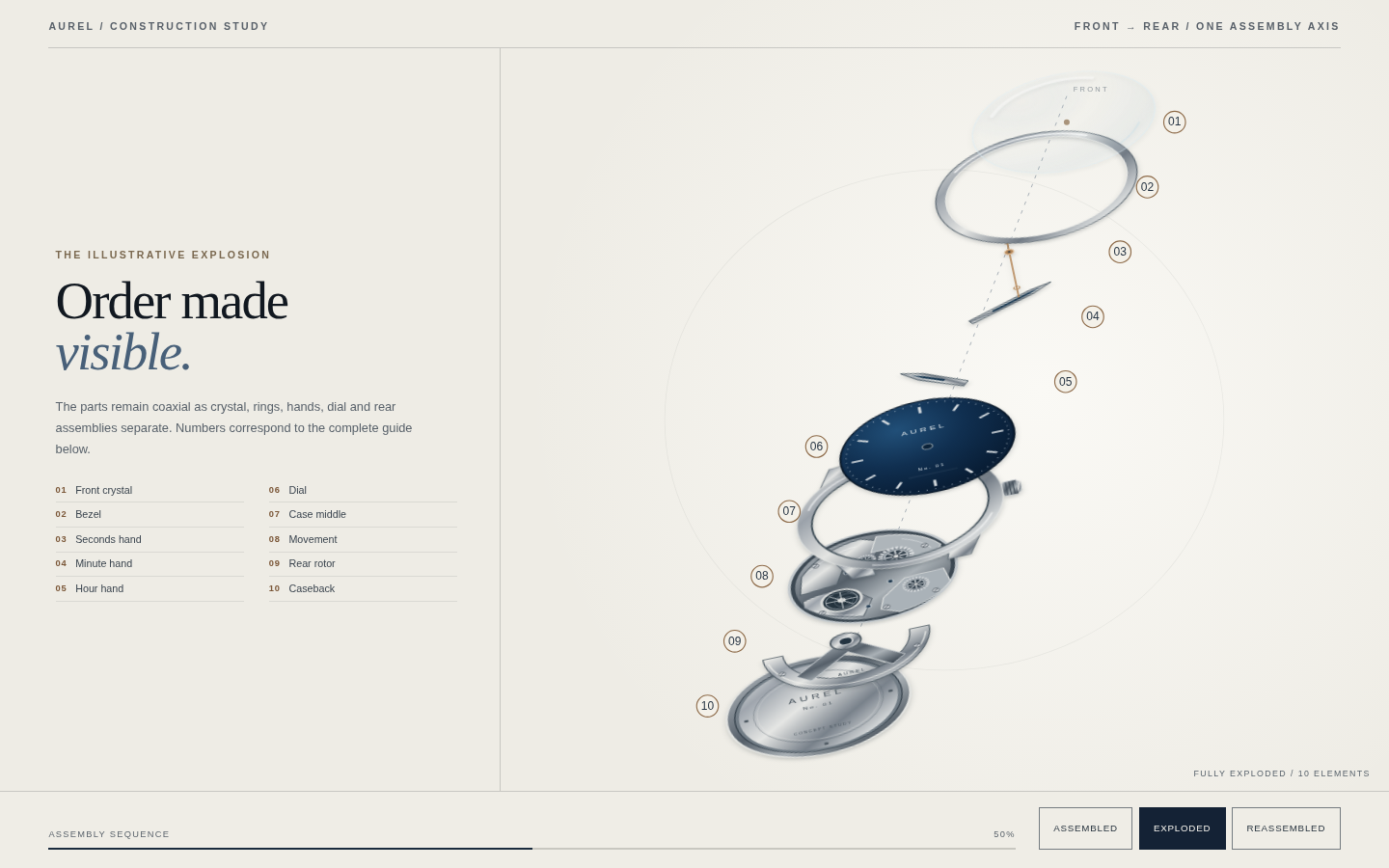
It passed 341 focused browser assertions and independent Terra inspection of the retained captures. An earlier failed browser pass is preserved too. This is the usable assisted candidate, not a fresh Astra result or a new Kimi score. Subscription assistance incurred $0 incremental provider charge; compute cost and total human review time were not measured. Full accessibility, physical devices and other engines remain unverified. Separate source · phone focus capture · attribution and limits.
What this comparison can establish
MiMo’s and Kimi’s constrained first responses remain incomplete even where browsers painted partial art. Muse’s syntax-failing repair stays visible. V1 screening, ample-budget Kimi v2, fresh subscription attempts and the assisted finish answer different questions; the selectors withhold misleading cross-cohort image pairs.
No universal winner is established. No further generation is needed to deliver this evidence or the existing assisted demo. Another paid repair would answer a different question and would need its own bounded scope. Keep the strongest observed craft and the remaining work separate when choosing what to build on.
Related reading
- How to read AI benchmarks — separate task evidence, resource conditions and broad model claims.
- Verification methodology — evidence levels and limits.
- Compare models and tools — other dated comparisons and workflow choices.
THE WHOLE RECORD
Every lane has a state.
No performance sorting is offered while acceptance is unverified. Pending, blocked and unknown never become zero.
Verified historical four-receipt total: $0.0782888022. This is a recovered cohort, not the recalled GLM/MiMo batch or the new experiment allocation. Human effort is separate and unmeasured.
Check the evidence.
Methodology, conditions & evidence limits
One creative task with declared cohort-specific prompt/budget differences; originals preserved; one bounded continuation or correction recorded separately with its extra resources. Delivery, parsing, partial static paint and functional acceptance are different observations. Unrun checks and unknown costs stay unknown.
The precommitted rubric keeps five judgments separate: function, visual craft, conceptual anatomy, accessibility, and repair/review burden. Acceptance needs all C01–C10 gates with appropriate evidence. No combined score; no engineering-accuracy claim from a mechanically unverified illustration. Operational/privacy blocks are not coding failures.
The independent reviewers classified reduced-view clipping differently: Astra’s C09 includes complete-view visibility; Opus’s C09 assesses static selection, with clipping under C08. Both static controls worked and both had clipped reduced views. Compare these observations rather than counting gate passes.
MiMo and Muse first requests used a 16,000-token cap, temperature 0.7 and different reasoning settings. Kimi used the same generated-token cap with high reasoning and no temperature parameter. V2 replaced the 16k instruction with ample-output guidance and used a 96,000-token cap/high reasoning. Sol’s subscription cap could not be enforced. Repair caps are disclosed per stage; these are not identical provider conditions.
WATCH-EXPLODE-01 v1.0 · SHA-256 d9a590c1c356e32cbaa347145135f50914f27c5aea0f976ddcbc5bce31716d3c. Separate from Toybox Clock 0/21. Actual captures share viewport, theme, requested normalized scroll position, motion and capture protocol. First-stage images may remain incomplete/inert at every requested state. Source findings cannot establish runtime passes.
Source downloads preserve original bytes as inert text. No submitted artifact executes on this page; Sol’s executable and images are excluded. Source inspection and ordinary artifact-specific authorization precede any render; a browser denial must not be bypassed. Public evidence omits private orchestration identifiers and host details; the original research records are retained. The download manifest records each file’s preservation or redaction.